Choose dates for the kind of visit you want
The best time to visit Chiang Rai depends on how you balance city temples, mountain visits and wetter conditions. In the city station’s historical climate normals, November to February is comparatively dry. April is the hottest month and August has the most rain. Those patterns help with choosing dates, while the weather on your actual travel day needs a separate forecast.
Chiang Rai weather should also be considered separately from air quality. A month with less rain is not a promise of clear mountain views or low particulate pollution. Plan the season first, then look at the forecast and air-quality information closer to your visit. This is particularly relevant if distant views form an important part of your plans.
Once you know the season, what to do in Chiang Rai lists temples, the Golden Triangle and day trips with distances.
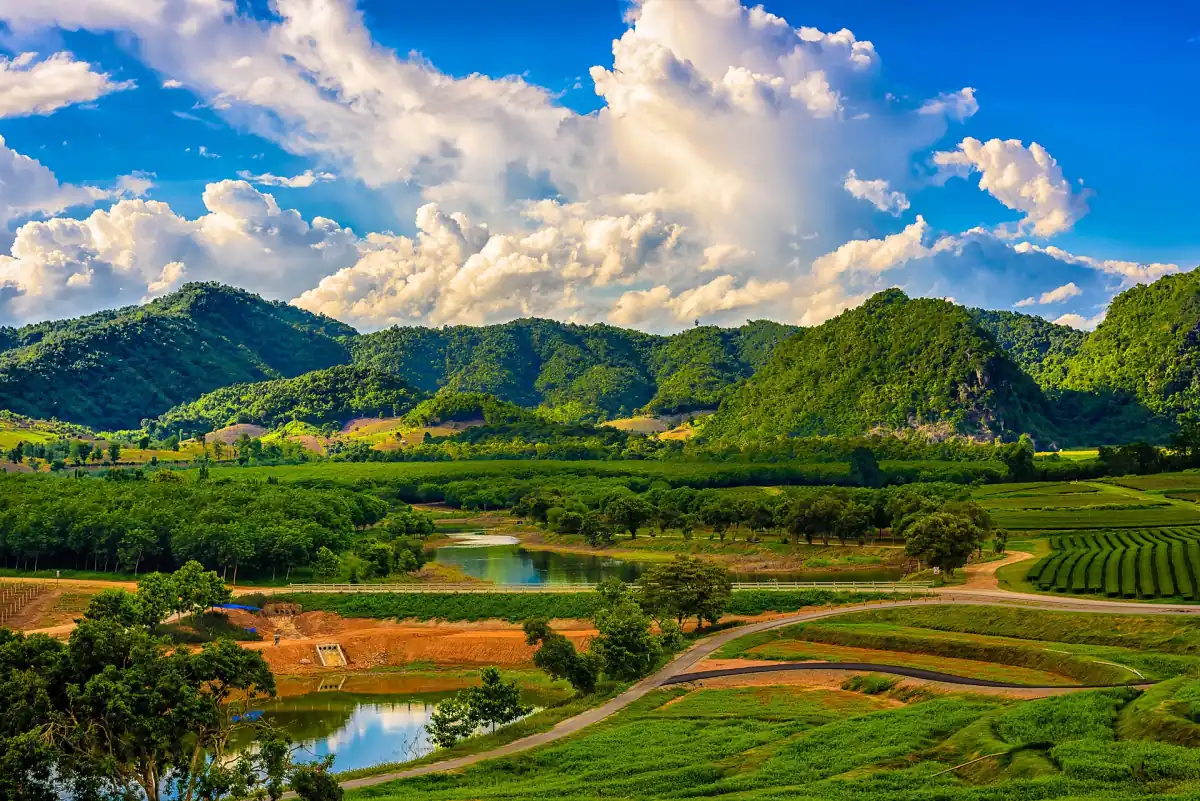
The city and temple outings and Doi Tung visits offer different ways to organise your time. Choose an activity for its actual route and included services. A seasonal description or a photograph of green hills is useful inspiration, while your departure date still needs its own practical planning.

Monthly climate normals for Chiang Rai
The table uses Thai Meteorological Department climate normals for 1991 to 2020, published in its 2023 report for Chiang Rai station. The temperature columns show mean daily maximum and minimum temperatures; rainfall is the mean monthly total. These are historical station averages, rather than a forecast or measurements for a mountain summit.
| Month | Mean daily maximum °C | Mean daily minimum °C | Monthly rainfall mm |
|---|---|---|---|
| January | 28.6 | 13.8 | 16.5 |
| February | 31.3 | 14.5 | 12.7 |
| March | 33.7 | 17.5 | 34.5 |
| April | 34.7 | 21.1 | 92.6 |
| May | 33.5 | 23.0 | 226.5 |
| June | 32.5 | 24.0 | 186.2 |
| July | 31.3 | 23.9 | 317.6 |
| August | 30.9 | 23.7 | 372.9 |
| September | 31.4 | 23.1 | 275.1 |
| October | 30.9 | 21.5 | 123.5 |
| November | 29.6 | 17.9 | 44.8 |
| December | 27.8 | 14.7 | 20.6 |
Read the table as a comparison of broad seasonal conditions. The low and high temperature figures are average daily minima and maxima within each month, rather than the extremes a visitor could encounter. A monthly rain total also says little about the timing of a particular shower. Use it to choose your season, then make daily plans with the current forecast.
A mountain day trip
This Doi Tung outing combines a tea tasting with villa and garden admission.
Hand-picked tours, booked through GetYourGuide. Prices are indicative starting prices in US dollars (as of November 2026). Tap a tour for live availability and the current price in your currency.


Doi Tung and tea visits
A day with Royal Villa and garden admissions, tea tasting and lunch provides a concrete mountain itinerary to fit around your travel dates.
November to February, with December in focus
November, December, January and February form the comparatively dry part of the historical record. If you are choosing dates around temple visits and provincial outings, this is a useful starting point. It describes a climate tendency rather than a daily schedule of sunshine. Keep the plan flexible enough to respond to the weather during your stay.
December has a mean daily maximum of 27.8 °C, a mean daily minimum of 14.7 °C and mean monthly rainfall of 20.6 mm in the 1991 to 2020 normals published in 2023. These city station figures offer a temperature reference for planning what to pack. Choose clothing that suits your own temperature needs as well as the places you intend to visit.
May to October is wetter in the same climate record, with August the rainiest month. When travelling in that period, allow room to adjust an outdoor-heavy itinerary. April is the hottest month in the normals, so think about how much of each day you want to spend moving between sights and how you will fit pauses into the route.
Haze and smoke season
The historical record includes haze days, which are a different measure from current PM2.5 concentrations. A dry-season label alone therefore leaves an important part of trip planning unanswered. Use Air4Thai, the Pollution Control Department’s air-quality portal, for measurements relevant to your dates and location. Read the time and station attached to the measurement you consult.
The provincial notice dated 9 February 2026 announced an open-burning ban from 14 February to 10 May 2026. That period has ended. It is a dated example of action against fire and particulate pollution, rather than a recurring calendar boundary for smoke. For a future visit, use notices and measurements that relate to the period when you will actually travel.
For a route built around mountain scenery, leave the order of visits adaptable. Weather forecasts, visibility and air-quality measurements answer different questions. Keeping those questions separate makes it easier to decide whether a particular outdoor day matches your priorities, without treating a historical monthly average as the condition you will encounter.
Mountain and temple outings according to conditions
The Doi Tung and Doi Mae Salong outing offered here includes hotel pickup and return, drinking water, a tea tasting, a hilltribe market visit, entry to a tea plantation, lunch, and admission to the Royal Villa and flower garden. It is advertised as a one-day excursion starting in Mueang Chiang Rai. Choose it for that set of visits and services.
Doi Tung’s Royal Villa, Mae Fah Luang Garden, Hall of Inspiration and arboretum are separate attractions. The garden has seasonally changing flowers, so make the visit about the garden as a whole rather than expecting one particular display. The excursion’s included services describe the day’s content; weather and air quality remain conditions for the date of travel.
For temple plans, the White Temple guide explains the visitor clothing guidance, including covered shoulders and legs below the knees. Combine packing for the season with packing for the actual places you will enter. The arrival guide helps you leave appropriate room for road journeys when organising your stay.
Questions about your visit
Which months are comparatively dry?
November to February are comparatively dry in the Chiang Rai city station climate normals for 1991 to 2020, published in 2023. This is a historical pattern rather than a forecast.
What is December like in the climate record?
The normals give a mean daily maximum of 27.8 °C, a mean daily minimum of 14.7 °C and monthly rainfall of 20.6 mm. They refer to the city station and the 1991 to 2020 period.
Do climate normals tell me the current air quality?
Climate normals and haze-day records serve different purposes from current particulate measurements. Consult Air4Thai for air-quality information and a weather forecast for your travel dates.